
The Reel World: Cinematic Conversations on Race and Religion
In 2022, the Episcopal Divinity School at Union Theological Seminary was awarded a grant from the Henry Luce Foundation for a program bringing together scholars, faith leaders, activists, and artists of color to explore religion and racial justice through the medium of film. With movies ranging from movie theater blockbusters to arthouse indies, this cohort uses art as a public pedagogical tool for social change.
This series explores moral imaginaries through roundtable conversations that analyze the myriad dynamics between race and religion.
Series Authors
Samah Choudhury is an Assistant Professor of Contemporary Islam in the Americas in the Department of Religious Studies at DePaul University, where she teaches courses on race, gender, religion, and popular culture. She is at work on her first book, Standup Citizen: American Muslim Humor and the Politics of Secularity, which examines how Muslims creatives have articulated themselves through the medium of standup comedy, and the ways that Islam gains recognition or becomes obscured under the specter and material demands of multicultural secularism.
Mihee Kim-Kort earned a Ph.D. in Religious Studies at Indiana University. Her research interests include Asian American cultural production, American Christianities, race, gender, and citizenship.
Amey Victoria Adkins-Jones is Assistant Professor of Theology and African and African Diaspora Studies at Boston College. Her research interests include mariology, Black feminist and Womanist thought, theological anthropology, iconography and visual theory, and human trafficking. She is the author of Immaculate Misconceptions: A Black Mariology (Oxford, 2025).
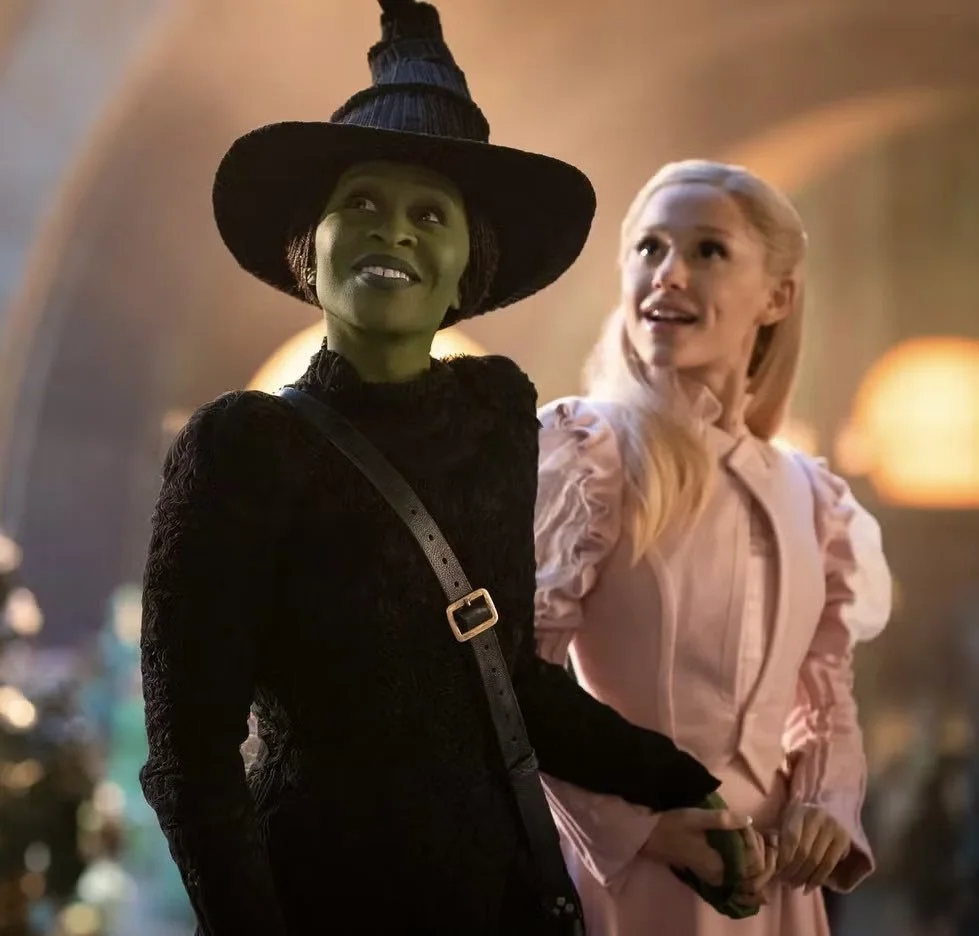
Defying Accountability: Wicked, For Good, and the Afterlives of Oz
This is the second conversation from the Race, Film, and the Moral Imaginary spring series. Here we talk about Wicked: Part 1 and its sequel Wicked: For Good to explore themes of prejudice, identity, and belonging. Based on the beloved Broadway musical and Gregory Maguire's 1995 novel, the films retell the story of Oz through the unlikely friendship of Elphaba and Glinda — the women who will become the Wicked Witch of the West and Glinda the Good. Directed by Jon M. Chu and starring Cynthia Erivo and Ariana Grande, the films ask us to reconsider who gets to be “good,” who is deemed “wicked,” and what it costs everyone when that distinction is made while reified on and against certain bodies.

When You Really Put Everything on a Bagel
A conversation among three scholars of race and religion discussing the 2022 film Everything Everywhere All At Once and how it might reorient our moral outlooks on the mundanities of racialized life in the US, familial obligation, nihilism, and self-worth.