A Roundtable on The Testament of Ann Lee
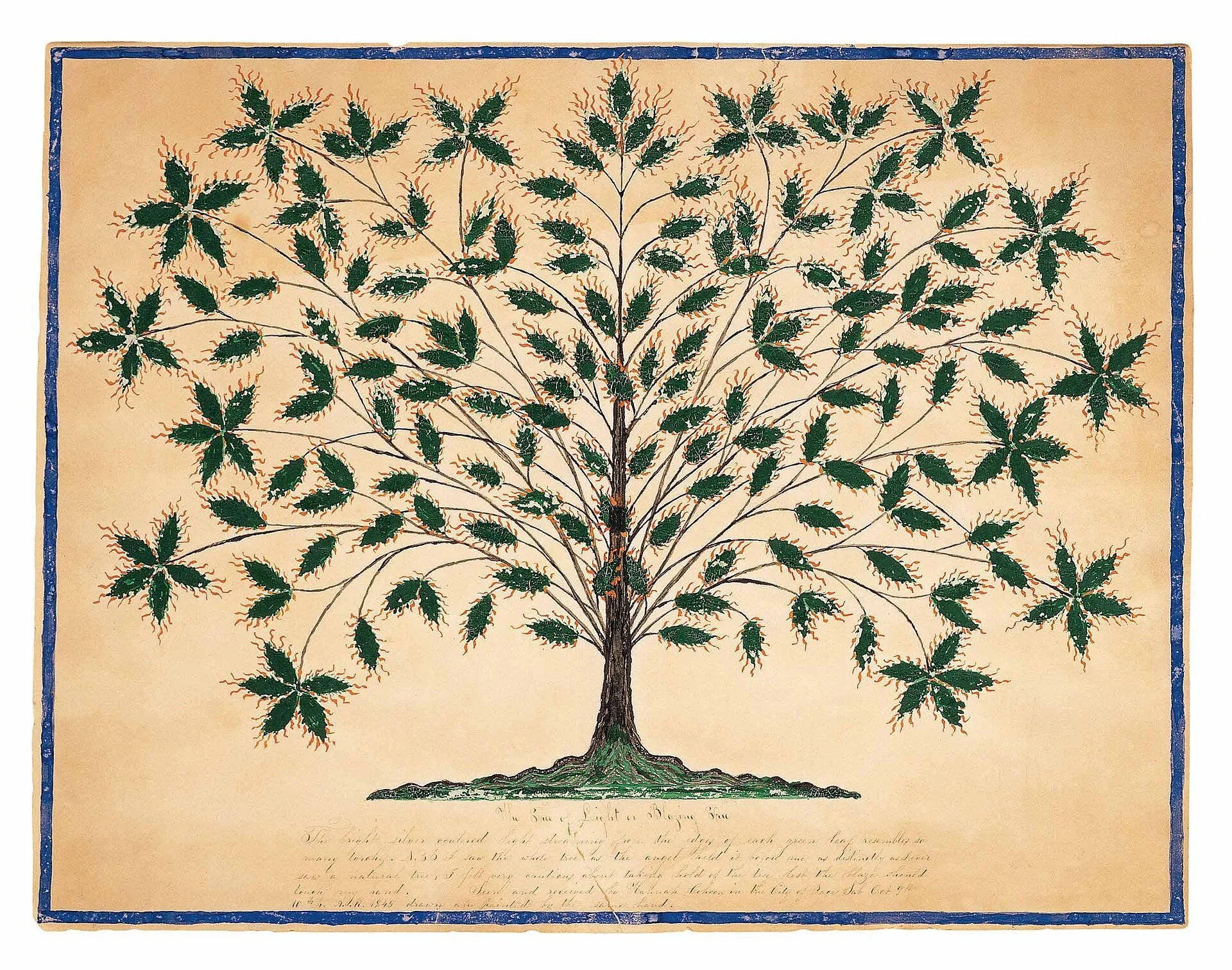
It is not every year that we get a movie about topics and themes so central to American Religion. Mona Fastvold’s film The Testament of Ann Lee is a biopic about the founder of the Shakers and it dramatizes her theological awakening to the necessity of celibacy and stages the dancing and singing that made the group so singular. It is a musical and a spiritual hagiography that addresses patriarchy, ecstasy, and the experimentalism of sectarian religion in the context of the early United States. It also unlocked a core memory for me: I remember being a very nerdy ten-year-old listening to choral recreations of Hildegard of Bingen music while drawing Georgia O’Keefe-style drawings in my diary. I understood this as my nascent feminist practice (I think my mom had just shown me the work of Judy Chicago). In retrospect I was extremely primed for my encounter with Sally Promey’s book, Spiritual Spectacles on Shaker art in the Era of Manifestations, which I found in my undergraduate library while trying to write about “spiritual art.” Many people encounter the Shakers first through the group’s creative productions, so it seems fitting that Fastvold was primarily drawn to the Shakers through their furniture and their songs. But their theological ideas also excite the filmmaker, who apparently understands Ann Lee as America’s first feminist. What do we make of Fastvold’s desire for a feminist spiritual foremother? Does our field have something to say about this movie other than correcting its historical inaccuracies? How do we as scholars respond to art? These are my pressing questions. So, I have asked graduate students in the field to give us their responses to the film. I hope that in responding to The Testament of Ann Lee we can take the temperature on what the next generation of scholars thinks Ann Lee means to our moment. I hunger and thirst to hear your responses.
Dana Logan, University of North Carolina - Greensboro